
The Surprising Truth About Apathy in Dementia: Why Your Loved One Doesn't Want to Do Anything
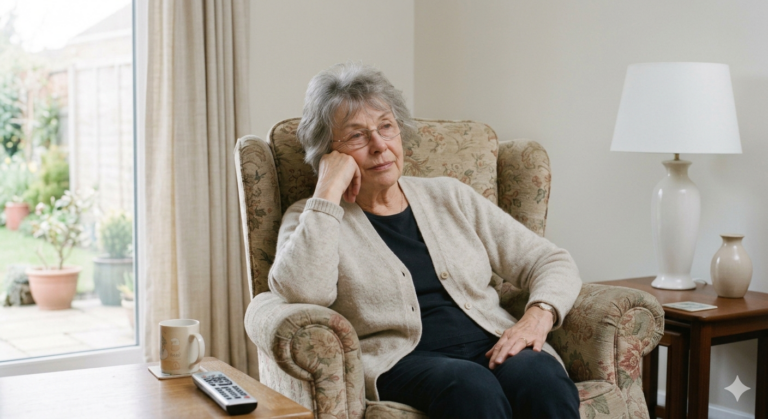
Have you noticed that your loved one with dementia doesn’t seem interested in doing anything anymore? Maybe they used to love watching their favorite television shows, working in the garden, going shopping, going for walks, or visiting with family. Now, they seem content to sit in the same chair for hours.
You may find yourself saying:
“Why don’t you want to do anything?”
“You used to love this.”
“Come on. Let’s go do something.”
And sometimes, despite your best efforts, they simply don’t seem interested. This can be incredibly frustrating for caregivers. You may wonder whether they’re depressed, bored, tired, or simply becoming “lazy.” But there’s another possibility that is important to understand: apathy in dementia.
What Is Apathy in Dementia?
Apathy is a decrease in motivation, interest, or initiative. A person may have less desire to start an activity, participate in conversations, or engage with the people and things around them.
Apathy in dementia can be especially confusing because your loved one may not necessarily appear sad. They may simply seem… uninterested.
They aren’t necessarily saying, “I don’t want to.” They may not even know why they don’t feel like doing something. This distinction matters.
When we assume someone is choosing not to participate, we may respond with frustration or pressure. But when we understand that changes in the brain can affect motivation and initiation, we can approach the situation differently.
Why Does Apathy Happen?
There isn’t always one simple explanation. Dementia affects the brain in ways that can interfere with motivation, decision-making, planning, and the ability to initiate an activity.
Think about how many steps are involved in something as simple as going for a walk. You have to decide to go. Then you have to figure out where your shoes are, put them on, find your coat, get up, walk to the door, and actually leave the house.
For someone living with dementia, those steps can become much more difficult. What looks like “I don’t want to go” may actually be “I don’t know how to get started.” That’s one reason apathy in dementia can be so easily misunderstood.
Apathy Isn’t the Same as Depression
This is an important distinction. A person with depression may experience sadness, hopelessness, changes in sleep or appetite, feelings of worthlessness, and a loss of pleasure.
A person experiencing apathy in dementia may show little emotional reaction or motivation without necessarily expressing sadness or hopelessness.
However, depression can occur alongside dementia, and significant changes in mood, behavior, sleep, appetite, or functioning should always be discussed with a healthcare professional.
Don’t automatically assume that every change is “just the dementia.” Pain, medication side effects, illness, infection, dehydration, constipation, poor sleep, hearing or vision problems, and changes in the environment can all affect how a person behaves and functions.
What Can You Do When Your Loved One Doesn’t Want to Do Anything?
The first step is to stop thinking of motivation as something you have to force. Instead, think about how you can make participation easier.
1. Don’t Ask an Open-Ended Question
You might say: “What do you want to do today?”
For someone experiencing apathy in dementia, that can be an incredibly difficult question. There are too many choices.
Instead, offer two simple options. “Would you like to sit outside or take a short walk?” Or “Would you like to watch television or help me make lunch?”
Simple choices can reduce the amount of thinking required.
2. Get the Activity Started for Them
Sometimes the hardest part is beginning.
Instead of saying: “Go get your shoes on so we can take a walk,”
try breaking it down. “Let’s get your shoes.” Bring the shoes over.
Then say: “Here you go. Let’s put these on.”
Once the first step is underway, the rest may become easier.
This is particularly helpful when apathy in dementia is affecting a person’s ability to initiate activities.
3. Don’t Assume They Need a Big Activity
Engagement doesn’t have to mean an outing or a complicated project. Sometimes it can be incredibly simple.
Folding towels. Sorting socks. Watering plants. Looking through photographs. Listening to music. Sitting outside. Helping prepare a snack.
The goal isn’t necessarily to keep them constantly busy. The goal is to provide opportunities for meaningful engagement.
4. Follow Their Interests
Think about what your loved one enjoyed throughout their life.
Did they like cooking? Working with tools? Animals? Sports? Music? Children? Gardening? Looking at old photographs?
You may need to modify the activity rather than eliminate it.
Someone who spent years cooking may no longer be able to prepare an entire meal independently—but they may still enjoy stirring, measuring, setting the table, or choosing between two ingredients.
5. Watch for the Best Time of Day
Some people function much better at certain times of the day. If your loved one is more alert in the morning, that’s probably the best time to schedule activities. Likewise, if afternoons are difficult, don’t expect them to suddenly become enthusiastic about a complicated activity at 4:00 p.m.
Pay attention to patterns. You may discover that your loved one isn’t completely uninterested—they simply have a limited window when they have the energy and attention to participate.
6. Be Careful With “You Used to…”
“You used to love going shopping.” “You always loved gardening.” “You used to be so active.”
I understand why caregivers say these things. You’re trying to reconnect your loved one with the person they used to be. But those reminders can sometimes create pressure without actually helping. Dementia has changed what your loved one can do.
The goal isn’t to make them exactly who they were before. The goal is to find ways for them to experience connection, purpose, comfort, and enjoyment today.
What If They Still Say No?
Sometimes, your loved one simply won’t want to participate. And that’s okay.
One of the hardest lessons in dementia caregiving is learning that you cannot always make another person participate—even when you know an activity would be good for them.
Try offering. Try simplifying. Try again later. But don’t turn every activity into a battle. With apathy in dementia, pushing harder doesn’t necessarily create more motivation. Sometimes it creates frustration for both of you.
And remember: there may be days when your loved one does very little. That doesn’t automatically mean you’ve failed as a caregiver.
Look for the Need Behind the Behavior
When someone doesn’t want to do anything, it’s easy to focus on the behavior.
“She’s just sitting there again.” “He doesn’t want to do anything anymore.”
Instead, try asking yourself: What might be making participation difficult right now? Are they tired? Are they overwhelmed? Is the activity too complicated? Are there too many choices? Are they uncomfortable? Are they anxious? Could they be experiencing pain? Is the environment too noisy? Are they simply having a difficult day?
Understanding apathy in dementia doesn’t mean you have to find the perfect activity every time. It simply gives you another way to look at what’s happening.
You Don’t Have to Keep Them Busy
This is something I want caregivers to hear. You don’t have to entertain your loved one all day. You don’t have to constantly come up with activities. You don’t have to feel guilty because they’re sitting quietly.
There is a difference between meaningful engagement and keeping someone busy every minute of the day. Sometimes sitting together and listening to music is enough. Sometimes having a cup of coffee together is enough. Sometimes simply being present is enough.
And sometimes your loved one may be perfectly content doing very little.
The Bottom Line
Apathy in dementia can be confusing and frustrating, especially when you remember how active and engaged your loved one once was. But what looks like laziness or a lack of caring may actually be a symptom of changes happening in the brain.
Instead of asking, “Why won’t you do anything?”, try asking: “What can I do to make this easier?”
Offer simple choices. Break activities into smaller steps. Follow their interests. Look for the best time of day. And most importantly, don’t measure your success by how much you got your loved one to accomplish.
Sometimes the most meaningful moments aren’t the big activities. They’re the quiet ones. A conversation. A favorite song. A walk around the yard. Looking through an old photo album. Sitting together.
Your loved one may not be able to do everything they once did. But that doesn’t mean there aren’t still meaningful moments to share. And as a caregiver, you don’t have to make every moment meaningful. You’re doing enough by being there.
Need More Practical Dementia Care Guidance?
If you’re caring for someone with dementia and find yourself facing questions, behaviors, and situations you weren’t prepared for, you’re not alone. There are options for answers and guidance.
Learn more about private consultation with Andrea: click here.
Learn more about The Dementia Caregiver Playbook, now available in paperback, eBook, and Video Companion formats—so you can choose the resource that works best for you. Look Inside the Playbook here.
Follow Dementia Nurse Andrea
for tips, tools, and expert insights to support your dementia care journey - every day!